Source Serving Plate for Restaurants, Hotels, and Catering
Compare 30 verified serving plate options from Chinese manufacturers. Buyers can evaluate bamboo materials, custom designs, and bulk pricing for restaurants, hotels, and catering services. Explore modern styles, eco-friendly features, and various sizes to find the perfect dishware for your business needs today.
Key considerations
Products List




Comprehensive Sourcing Guide
Serving Plate Sourcing Guide
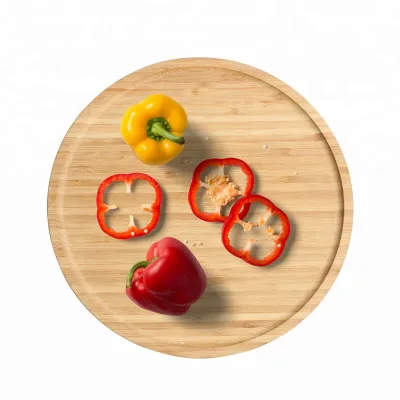
Sourcing serving plates requires careful attention to material integrity and surface finish, as observed listings highlight bamboo as a primary construction material with polished techniques. Buyers must verify that the "Eco-Friendly" and "Stocked" attributes align with their sustainability goals while ensuring the "Round" shape and "BAMBOO" color meet specific aesthetic requirements for modern or modern luxury dining environments.
Commercial buyers ranging from restaurants to bubble tea bars should confirm that the "Plate Dish" type supports their specific service model, whether for fast food, hotels, or specialty stores. The availability of customization for patterns and logos allows for brand differentiation, but procurement teams must validate that the "Customized" pattern type does not compromise the structural integrity of the "Five-Ply Corrugated Carton" or standard "Carton Packing" used for shipping.
Product Scope and Observed Listing Signals
The observed market signals indicate a diverse range of serving plate models, including specific identifiers like G-21239 and DW21-0404, which suggest distinct product lines with varying dimensions. Buyers should note that single package sizes vary significantly, with some units measuring 30X20X20 cm while others are defined by standard dimensions like 3021H44cm or D25*H25cm, necessitating precise verification before bulk ordering to avoid logistical mismatches.
Listing attributes reveal that while some products support "All-Season" usage, others explicitly state "Not Support" for holiday selections, indicating a need to match product lifecycle to seasonal demand cycles. The presence of "Hot Designs" and "Simple" styles suggests a market split between trend-driven and functional procurement, requiring buyers to distinguish between stock items and those requiring custom design approval to ensure timely delivery for their specific commercial operations.
Technical Specifications to Verify
Technical verification must begin with diameter and shape consistency, as observed listings specify a 4.25-inch diameter alongside various standard size codes that may not be immediately compatible with existing tableware sets. Buyers should cross-reference the "Single gross weight" of 1.000 kg against the "Single package size" to calculate accurate freight costs, ensuring that the "Polished" surface handling and "Embossing" techniques do not add unexpected weight or volume to the shipment.
Surface handling and material processing are critical for food safety and durability, particularly when the product is intended for "Drinks, Food, Toy" usage or strictly food service. Procurement teams must confirm that the "Bamboo" material undergoes appropriate treatment to prevent warping, and that the "Customized" pattern type is applied via a method that does not introduce toxic residues, especially given the varied "Surface Handling" options like embossing observed in the current market data.
Compliance and Safety Documentation
Compliance verification is essential for serving plates entering regulated markets, as observed listings cite certifications such as BSCI, CE/EU, and FDA, which indicate adherence to specific labor and safety standards. Buyers must request current certificates for each specific model number, such as NB2108 or 1-21239, to ensure that the "Bamboo" material and any applied finishes meet the rigorous requirements of the destination country's food contact regulations.
Documentation should also cover the origin and manufacturing standards, with listings indicating origins in Fujian and Shandong, China, alongside a "Fob: Qingdao" shipping term. It is crucial to verify that the "Standard" listed as "customized" or specific dimensions like 3021H44cm is backed by a formal quality assurance protocol, ensuring that the "Commercial Buyer" categories like caterers and supermarkets receive products that consistently meet safety expectations without relying on generic claims.
Cost Drivers and Commercial Terms
Cost structures are heavily influenced by the "MOQ" requirements, which range from 10 to 2000 units, with specific listings showing a baseline of 500 pieces for certain models. Buyers must calculate the total landed cost by factoring in the "Supply Ability" of 10000 pieces per month against their order volume, ensuring that the supplier can meet demand without incurring rush fees or compromising on the "Normal Packing" or "Poly bag" packaging quality.
Commercial terms also depend on the "Sample Acceptable" policy and the "Customization" availability, which can significantly alter the unit price and lead time. While observed price ranges exist, the final cost is driven by the complexity of the "Logo" customization and the specific "Packing Details" required, such as "Color box" or "PDQ display box," which add value but increase the per-unit expense for retailers and food service providers.
Supplier Qualification and Quality Control
Supplier qualification should prioritize those with a proven "Supply Ability" and a history of serving diverse commercial buyers, including fast food services and department stores. The presence of "BSCI" certification suggests a commitment to ethical labor practices, but buyers must also audit the production facility in Fujian or Shandong to ensure that the "Polished" and "Embossing" techniques are consistently applied across all batches to maintain product uniformity.
Quality control protocols must address the "Customized" nature of the orders, ensuring that the "Pattern type" and "Logo" application are accurate before shipment. Since the "Product name" is listed as "Bamboo plate," buyers should implement incoming inspection checks for surface defects, ensuring that the "Eco-Friendly" claim is substantiated by the material quality and that the "Round" shape maintains its geometric integrity throughout the supply chain.
Long-Term Procurement Checks
Long-term procurement success relies on monitoring the consistency of "Product name" and "Material" attributes over time, as bamboo can be susceptible to environmental changes affecting its durability. Buyers should establish a schedule for re-verifying the "Certification" status of their suppliers, ensuring that FDA or CE/EU compliance remains valid as regulations evolve and that the "Place of origin" continues to meet the required quality benchmarks for international trade.
Sustainability and supply chain resilience are key factors for long-term partnerships, requiring regular reviews of the "Customization" capabilities and "Design" updates to keep pace with market trends like "Modern" and "Morden Luxury" styles. Procurement teams must maintain open communication regarding the "Port of dispatch" and "Lead times" to anticipate delays, ensuring that the "Stocked" items remain available while custom orders are fulfilled without disrupting the operational flow of restaurants and retail stores.
FAQs
What materials are used for the serving plates?
The serving plates are made from bamboo, which is an eco-friendly material suitable for food service. This natural material ensures durability while maintaining an environmentally conscious profile for modern dining needs.
Can I request a custom logo on the plates?
Yes, you can request a custom logo on the plates as customization is available for this product. Buyers can specify their branding needs to create unique items for their specific business requirements.
Which certifications do these bamboo plates hold?
These bamboo plates hold BSCI, CE/EU, and FDA certifications to ensure safety and compliance. These standards verify that the products meet international requirements for food contact and ethical manufacturing practices.
How much is the minimum order quantity for plates?
The minimum order quantity is 500 pieces for this specific bamboo plate model. Some listings may show different ranges, but the confirmed standard requirement starts at this specific volume for new orders.
What is the typical lead time for production?
The supply ability is 10,000 pieces per month, indicating a robust production capacity for bulk orders. While specific lead times vary, this monthly output suggests the manufacturer can handle significant volume requests efficiently.
Where are these serving plates manufactured?
These serving plates originate from China, with specific production locations in Fujian and Shandong provinces. The goods are dispatched from ports like Qingdao and Fuzhou to international buyers.
What packaging options are available for the plates?
Packaging options include poly bags, shrink packages, white boxes, color boxes, PVC boxes, and PDQ display boxes. Standard packing also utilizes five-ply corrugated cartons to ensure safe transit of the items.